Some galleries don’t just show paintings; they hold stories that visitors can feel in their bones. Huvy’s Gallery carries that kind of pulse, where memory lingers in color and light long after the frames drift out of view. The spirit behind the work feels both intimate and communal, like a friend who knew how to listen and then paint it back. This is a small salute to that energy, and to the people who find themselves reflected in it.
The Echo of a Life in Brushstrokes: Jewish Art Remembered
Every canvas whispers choices: which light to chase, which edges to soften, which moment to save from rushing away. In a space shaped by loss and love, those choices feel even more deliberate, almost like a hand on a shoulder guiding the gaze. Visitors notice it because the work doesn’t demand attention; it extends an invitation. It’s the kind of quiet that speaks clearly, with gentle conviction behind every hue.
There’s a particular grace in art built around remembrance, a sense that the painter was in conversation with time. The compositions lean into pauses, letting silence do some of the heavy lifting. Texture becomes vocabulary, and negative space becomes a heartbeat. Even the margins say something, like a handwritten note tucked inside a book for someone who will read it later.
In that dialogue, the gallery becomes a living room for memory, not a museum of it. People drift from piece to piece and recognize gestures they’ve seen before: a shared grin, a shy glance, a late-afternoon window. Those motifs create a map that anyone can follow, especially those who arrive carrying their own stories. The art nods back, as if to say, yes, that belongs here too.
Why Memory Finds a Home in Galleries
Galleries slow time down just enough for recollection to catch up. The lighting, the spacing, the gentle hush-everything conspires to help people breathe a little deeper and look a little longer. In that air, memories feel less slippery and more cooperative, ready to stand still for a minute. The result is part meditation and part reunion, with color as the common language.
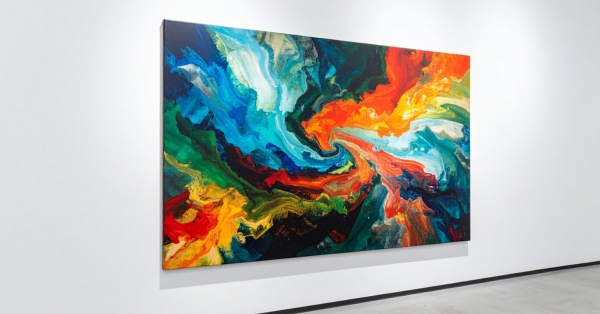
Tradition also plays its part, folding history into present-day expression without turning it into glass. Communities that prize remembrance have always found ways to carry their stories forward through images, objects, and ritual. In many rooms, identity and tenderness travel side by side, making space for sorrow without letting it swallow joy. That balance is where the art keeps its footing, steady and generous.
For those exploring the lineage of devotional aesthetics and contemporary meaning, the conversation often touches the wide and evolving realm of jewish art. It’s a space that welcomes both reverence and experiment, where symbols can unfurl into something newly personal. Viewers sense this openness-not as a contradiction, but as a promise that tradition is still breathing. And in that breath, memory finds another chapter to inhabit.
Art That Carries Memory: A Snapshot of Today
To make these differences easy to scan, here is a table showing common memorial-focused art forms, typical mediums, sizes, average creation time, and 2025 popularity trends.
| Art Form | Typical Mediums | Common Size | Avg. Creation Time | 2025 Popularity Trend |
|---|---|---|---|---|
| Intimate Portraits | Oil on panel, charcoal, pastel | Small to mid (8×10-16×20 in) | 2-6 weeks | Rising |
| Memory Landscapes | Acrylic, watercolor, mixed media | Mid to large (18×24-30×40 in) | 3-8 weeks | Stable |
| Object Studies | Graphite, ink, photo transfers | Small (5×7-11×14 in) | 1-3 weeks | Rising |
| Text-Integrated Works | Collage, embroidery, gold leaf | Small to mid | 2-5 weeks | Rising |
| Light-Based Installations | LED, glass, found materials | Room-scale | 6-12 weeks | Emerging |
What stands out in this snapshot is how personal formats continue to grow while still leaving space for ambitious installations. The mix suggests that viewers want to stand close enough to feel spoken to, then step back for a larger view that frames the personal in the communal. That rhythm-near, far, near again-seems to carry remembrance with unusual tenderness. It’s not only what is pictured; it’s how the viewer is invited to move through it.
For artists and curators, these patterns point to a thoughtful blend of scale and detail. Small pieces can anchor a room, giving the eye a place to rest, while larger works set the tone for how memory moves across space. The interplay keeps the experience from feeling either too private or too distant. Instead, it lands in that sweet spot where intimacy meets belonging.
From Studio to Heart: How Viewers Connect
Connection starts long before the first viewing; it begins in the studio, where intent settles into material choices. Painters and makers often talk about pacing-letting a surface dry, returning to a gesture, resisting the urge to rush. That patience has a way of showing up on the wall, quietly steadying the viewer. When the work breathes, the person in front of it tends to breathe, too.
Three ways a memorial piece often “speaks” to visitors:
- It offers a point of entry-an eye, a shoreline, a remembered object-that feels instantly familiar.
- It reveals a second layer on closer look, hinting at time, texture, or a personal ritual stitched into the surface.
- It leaves room for the viewer’s own story, resisting tidy conclusions in favor of thoughtful openness.
That sequence-entry, discovery, openness-mirrors how memory itself tends to unfold. People don’t remember all at once; they circle the edge, step inside, and then find echoes they didn’t expect. The best pieces honor that rhythm without forcing it. They hold still and let the viewer arrive in their own time.
Curating Remembrance: Practical Ways to Engage
Curating for remembrance doesn’t mean leaning only on solemn tones. It means shaping a pathway that balances quiet with lift, so that visitors leave lighter, not heavier. A wise curation treats grief as a companion to joy, not its rival. That balance is an act of care, visible in everything from wall order to bench placement.
Simple checks to make a memory-centered viewing more meaningful:
- Visitors can pause at the first piece and count to ten before reading a label.
- Visitors can stand at two distances: arm’s length and across the room.
- Visitors can notice where the eye rests when looking away-then look back to see whether the work anticipated it.
- Visitors might ask one question the art seems ready to answer, and one it refuses to answer.
Pro Tip: Pairing a small piece with a short written reflection-even just a few handwritten lines-and reading it after an initial look often helps. The second reading usually unlocks a different layer, not because the work changed, but because the viewer did. That small shift can turn appreciation into companionship. In remembrance spaces, that companionship matters more than any single fact.
Names That Carry Light
Some names become shorthand for a feeling, and this one has grown into exactly that-an affectionate beacon for those seeking warmth in craft. People who come looking for huvys often speak about finding not just images but presence, as if the paintings were keeping company with them. The resonance travels beyond one room or one city; it shows up in the way visitors talk to one another after they leave. That is legacy: a conversation that keeps going, even when the lights are off.
Closing Thoughts: Remembering Through Art, Carried Forward
Remembering Through Art isn’t just a theme; it’s a way of seeing that turns a gallery into shared ground. The soul of Huvy’s Gallery lives there, where tenderness meets technique and memory finds a frame roomy enough to breathe. Anyone who steps inside that circle understands why the stories keep returning, a little softer and a little brighter each time. And as long as people keep looking, the tribute keeps growing, quietly alive in every glance.